
Hill Climb Racing
Move
Pause
Game Details
- Technology: HTML5
- Playable on: Browser
- Platforms: Android
- Genre: Adventure game
- Released: 2012
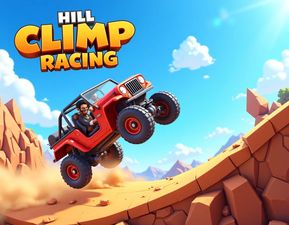
Hill Climb Racing turns every hill into a fight between speed, balance, and gravity. Bill Newton drives across rough terrain while your two driving controls manage gas and brake. Push too hard, and the vehicle flips. Hold back too much, and the next rise may stop you cold.
This 2012 2D physics-based driving game rewards control more than frantic inputs. You collect coins, watch your fuel, improve the vehicle, and learn how each stage changes your rhythm. A short jump can demand more skill than a long straight stretch.
Use the Arrow Keys to move and the Space Bar to pause. Then play Hill Climb Racing online and test how far smooth driving can carry one run.
Hill Climb Racing gives you two driving controls: gas and brake. On the keyboard, the verified movement binding is the Arrow Keys, while the Space Bar pauses the run. Your main task stays simple. Control forward motion, then keep the vehicle balanced across changing slopes.
Study the next hill before reaching its crest. A steep face needs power, but the top often demands restraint. Constant acceleration sends the front end upward too quickly. That leaves less time to prepare for the landing.
Use the brake before the vehicle reaches a dangerous angle. A short release can settle the body without killing all your momentum. If the vehicle launches, use the controls in mid-air to change its angle. Point the nose toward the landing surface, rather than staring at the distance ahead.
Small corrections work best. Hold a direction briefly, watch the body respond, then adjust again. Long inputs create large rotations, especially after a fast climb. Learn to separate three moments: approach, lift-off, and landing.
Approach each crest with a plan. A controlled climb gives you more choices after the wheels leave the ground. A rushed climb leaves only recovery. That difference explains why smooth drivers often pass careless speed runs.
Feather the throttle when the wheels begin to lose contact. A lighter input keeps the front end from rising too far. It also preserves control for the landing. Use stronger acceleration on the lower slope, then ease off near the crest.
Brake during a steep descent when the body starts pitching forward. Do not wait for a full flip. Early corrections protect the next hill and keep the run calm.
Fuel creates pressure during every long run. A strong distance record means little if the tank empties before the next canister. Watch the fuel level while driving, but keep your eyes on the terrain too. A rushed pickup can cause a worse mistake than a slower route.
Plan your pace around the next fuel canister. Build speed on a safe slope, then reduce risk near rough landings. The goal is not maximum speed at every moment. The goal is enough momentum to reach fuel without damaging the vehicle’s balance.
When a canister sits beyond a jump, prepare before takeoff. Keep the vehicle steady, collect it cleanly, and land with both wheels ready for the next rise. Avoid last-second steering changes in the air. Those changes often turn a useful pickup into a crash.
Fuel management also changes how you judge distance. A cautious run may travel farther than a reckless one. Learn which hills allow speed and which hills punish it. Your best pace is the fastest pace you can repeat.
Coins tempt you toward awkward edges and high jumps. Take them when the approach looks stable. Skip a risky line when it threatens the entire run.
Safe progress still builds value. A steady route lets you collect more coins over time and gives you better practice with the terrain. Greed works only when your vehicle can handle the landing.
Recognize a lost run early. If the vehicle lands upside down or misses a key fuel canister, recovery may waste more time than a restart.
Restart with a clear lesson. Change your approach speed, brake earlier, or choose a safer coin line. Do not repeat the same failed input.
Vehicle upgrades shape how each run feels. The engine affects your ability to build speed for climbs. Tires help the vehicle deal with uneven ground. Suspension supports control when the wheels meet rough landings. The fuel tank gives a run more room before fuel pressure takes over.
Think of these upgrades as different answers to different problems. A weak climb points toward engine work. Wild landings suggest suspension or tire improvements. Early fuel shortages make the tank a sensible focus.
Do not treat every upgrade as a general power increase. Each part changes a specific weakness. Watch your failed runs, identify the repeated problem, then spend coins with that problem in mind.
Early improvements affect more of your playtime. You use them across every stage and every later attempt. A better-balanced vehicle also makes practice more useful because fewer failures come from basic limits.
Upgrade with a purpose, not just because coins are available. Pick the part that removes your biggest barrier. That choice gives each purchase a clear job.
Focus on one vehicle while learning the physics. You will notice its response faster and judge upgrades more clearly. Switching constantly makes every hill feel unfamiliar.
Build confidence with one setup first. Explore other vehicle behavior after your main driving habits feel steady.
Ready for another run? Start playing Hill Climb Racing here and put those control tips to work.
Hill Climb Racing uses multiple stages to change the shape of each challenge. Countryside hills teach the basic rhythm of climbing, launching, and landing. Desert terrain asks for careful handling across its open rises. Arctic ground makes each uneven section feel less forgiving.
The Moon stage changes the run in a different way. Low gravity gives jumps more hang time and alters how the vehicle moves through the air. These stages do not simply repaint the same course. They ask you to adjust speed, timing, and balance.
Low gravity changes how you approach coins on the Moon. A jump lasts longer, so the vehicle has more time to rotate before landing. That extra airtime can help reach a coin line, but it also makes overcorrection easier.
Use gentle mid-air inputs. Aim for a clean landing first, then chase difficult coin paths when your timing improves.
Choose your approach based on the stage, not habit. Rough ground rewards stable landings. Long rises need dependable forward power. Moon jumps demand patience because the vehicle stays airborne longer.
Let the terrain set your pace. A familiar input can behave differently on another stage.
Hill Climb Racing is available on Android and iOS. These mobile versions keep the focus on short, single-player runs, physics-based driving, fuel management, coins, and vehicle upgrades.
Mobile play suits quick attempts. You can work on one hill, pause when needed, and return to the same driving challenge later. The game also has a Windows release, giving players another supported device option.
Windows provides a desktop route for Hill Climb Racing.
Its HTML5 format supports browser access without requiring a separate game download for that experience.
Hill Climb Racing also supports offline play. That makes practice useful when an internet connection is unavailable after the game has loaded.
Offline runs still focus on the same core loop: drive, balance the vehicle, collect coins, manage fuel, and improve your setup.
Hill Climb Racing Lite is the browser version of Hill Climb Racing.
Hill Climb Racing+ is the ad-free version associated with Apple Arcade. It belongs to the wider Hill Climb Racing series, but it should not be confused with the original release or the browser-based Lite edition.
Keep the names separate when choosing how to play. Original Hill Climb Racing, Hill Climb Racing Lite, and Hill Climb Racing+ describe different releases.
The web version feels different because browser play changes the way you enter the game. You open the page and begin through the browser, while other releases use their own device environments.
Try Hill Climb Racing now and take one more run across the hills.
| Game | Why Similar |
|---|---|
| Moto X3M | Both use vehicle controls with acceleration and braking, and require balancing the vehicle in midair to land properly. |
| Drift Boss | Both center on controlling a moving vehicle across a track by timing movement inputs to stay on the path and avoid falling/crashing. |
Use Arrow Keys to move. Use Space Bar to pause.
Choose a stage or version and begin driving immediately.
Press gas to climb, but ease off on steep crests.
Use brake to slow down or rotate the vehicle in mid-air.
Grab fuel before the gauge empties, and pick up coins when the route stays safe.
Aim for both wheels or a level landing to avoid instant failure.
Use earned coins on parts that improve stability before chasing risky speed.
Yes. Hill Climb Racing has a mobile release through Google Play.
No. The browser version of Hill Climb Racing runs on the page without a separate installation.
Yes. Some versions also include optional in-app purchases.
It is built around physics and balance, not clean tracks and perfect grip. The best runs come from managing tilt, fuel, and momentum rather than holding acceleration.
Helpful Resources:
📱 Download on:
Hill Climb Racing is a focused HTML5 adventure game that has remained appealing since its 2012 release. As a single-player experience, it offers a straightforward way to enjoy an individual gaming session in a browser, on mobile, or on Android. Its clear identity makes it easy to choose when you want a compact adventure.
Movement is controlled with the Arrow Keys, while the Space Bar pauses the game, providing an uncomplicated setup that is easy to understand. The combination of an adventure format, single-player focus, and broad platform availability makes Hill Climb Racing a practical choice for accessible play. If you are ready to experience it, play Hill Climb Racing right here on this page.
No comments yet. Be the first to share your thoughts!