Built with the Unity engine, the game was developed as a fast first-person reaction test. It established an active following across browser gaming portals due to its fluid 3D motion, vibrant neon art style, and immediate restart loops.
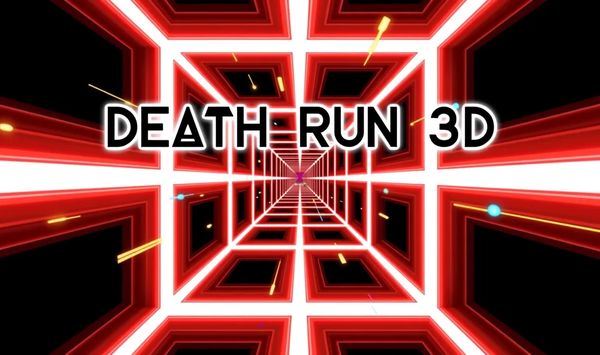
Death Run 3D throws you into a neon pipeline where speed leaves no room for hesitation. Geometric blocks slide across the tunnel, closing lanes as you race forward. The first-person view makes every opening feel close, fast, and easy to misread. One late steering move ends the run.
This singleplayer reflex game keeps its appeal simple. You read the tunnel, shift toward open space, and react before the next obstacle reaches you. Its fluid 3D motion and bright neon style make each attempt easy to start, while immediate restarts encourage another try. If you want a quick browser challenge, play Death Run 3D online and test your reactions now.
Start with small movements. Learn how the corridor presents danger, then build a steadier rhythm. The best runs come from controlled corrections rather than frantic turns.
Navigating Neon Corridors in Death Run 3D
First-Person Tunnel Perspective
Death Run 3D places the camera inside a cylindrical neon tunnel. You do not watch a character from above or behind. Instead, the corridor fills your view, and every obstacle arrives directly along your line of travel.
That viewpoint limits what you can see. A block farther ahead may hide the next opening. The tunnel also gives little time to study each shape. You must spot a safe lane, move toward it, and prepare for the geometry beyond it.
Keep your eyes near the center of the screen first. This helps you judge the corridor’s width before making a move. Looking only at one block can pull your attention away from the next threat.
Speed changes how you read distance. An opening that looks generous may shrink before you reach it. A short steering adjustment often works better than a wide sweep, especially when the clear space sits beside another moving block.
Think of each section as a quick visual test. Identify the blocked side, locate the open side, and shift with purpose. The first-person camera rewards early recognition, not last-second panic.
Dynamic Movable Blocks
The geometric blocks do not simply decorate the pipeline. They shift into flight lanes and force you to change position while moving forward. A route that looks clear at one moment may close soon after.
Watch the block’s movement before committing. If it drifts across your path, guide yourself toward the space it leaves behind. Make one clean adjustment, then return toward a stable line instead of swinging from wall to wall.
Four Distinct Tunnel Game Modes
Track Structure and Differences
The game’s shared structure centers on one fast tunnel run. You move through a neon pipeline while geometric obstacles alter the available lanes. That core setup gives Death Run 3D its clear identity as an endless runner and reflex challenge.
Do not expect the track to behave like a fixed straight road. The corridor keeps presenting new block positions as you travel. Each moment asks the same useful question: which part of the tunnel remains open right now?
The first-person design creates the main difference between a safe move and a bad one. You cannot rely on a distant overview. You must judge openings from inside the course, with forward motion constantly reducing your reaction window.
Singleplayer play keeps the focus on your own run. There is no second racer to distract you or block your route. Your score reflects how long you maintain control through the shifting tunnel.
That focused structure also makes short attempts useful. A failed run shows where your reading broke down. Restart, watch that area more closely, and use a smaller correction next time.
Difficulty Progression Across Modes
Death Run 3D builds pressure through speed, limited vision, and moving lane blockers. The longer you survive, the more demanding each decision feels. You need quicker recognition, but your steering must remain calm.
Rather than forcing a complicated plan, keep refining your response to the next opening. Early awareness creates more time for every correction.
Ready for another run? Start Death Run 3D here and see how far your reflexes can carry you.
Steering and Reflex Tactics in Death Run 3D
Managing Input Timing
Use the Arrow Keys to move through the tunnel. You can select WASD from the setting if that layout feels more natural. Keep one control scheme throughout a run, because changing hand positions wastes valuable attention.
Tap with intent instead of holding a direction for too long. A long press may carry you past the open lane and into another block. Short inputs give you room to check your position before the next correction.
Center yourself whenever the corridor allows it. A middle position gives you access to both sides when the next obstacle shifts. Hugging one edge can leave you with only one escape route.
Use a simple timing pattern: see the gap, move toward it, then release the input. Avoid stacking several turns before you know where the tunnel leads. The game moves quickly, but frantic steering creates its own danger.
When the view feels overwhelming, reduce the size of each decision. Focus on the nearest safe opening first. Once you reach it, scan again rather than trying to solve the whole tunnel at once.
Scanning Ahead for Route Openings
Look beyond the closest block whenever the tunnel gives you a clear view. The next opening may require a second adjustment, so early scanning prevents sudden direction changes.
Read space, not just obstacles. A bright gap between moving shapes marks your route. Aim for its center, keep your motion smooth, and prepare to reassess as new blocks enter view.
Collision States and Run Termination
Instant Failure Conditions
Clipping a geometric obstacle ends the run immediately. The game treats contact as failure, so even a small mistake carries a clear result. You do not get a recovery window after impact.
That rule makes precision more valuable than speed alone. A rushed turn can place you against the edge of a block before you have time to correct. Keep your movement measured when the available lane looks narrow.
After failure, the run restarts quickly. Use that short loop to test one change at a time. If you turned too early, wait slightly longer. If you reacted late, begin scanning sooner on the next attempt.
Impact also gives useful feedback about your spatial balance. You may have aimed at an opening but entered from the wrong angle. Adjust the line of approach, not only the direction of the final tap or key press.
Each restart removes setup time and returns you to the same core challenge: survive the moving tunnel. That direct structure keeps attention on improvement rather than menus or long pauses.
Distance Scoring and the World Record Pursuit
Your run result centers on distance survived. Every extra stretch of tunnel adds to the achievement you are chasing, while a collision ends that progress immediately.
That creates a strong competitive loop. Push farther, restart after impact, and try to set a stronger mark. Players who enjoy world-record pursuits can treat every opening as another chance to extend the run.
Platform Availability and Technical Architecture
Mobile App Store Editions
Unity supports the game’s fast first-person motion, bright tunnel visuals, and responsive obstacle movement. Those technical choices matter because the game depends on quick visual feedback.
For browser players, the key benefit is immediate access to the tunnel challenge. Open the game, choose your control layout, and focus on the next gap. The experience suits short sessions because each run begins quickly and ends clearly after an impact.
The controls stay simple across the experience. Arrow Keys move you through the pipeline, while the setting lets you select WASD instead. That limited input design keeps the challenge centered on timing, positioning, and visual reading.
Unity also helps the game maintain its distinct presentation. Neon shapes stand out against the dark tunnel, making lane changes easier to notice at high speed. Clear visual contrast supports fast decisions without adding extra controls.
Keep your attention on the route rather than the platform label. Death Run 3D works best when you can read the next opening, make a controlled move, and restart instantly after a mistake.
Movable geometric blocks that shift to close flight lanes
Instant failure on impact with immediate run restarts
Optional WASD or Arrow Key control schemes
How to Play Death Run 3D
Step 1: Use the game controls
Use Arrow Keys to move or select WASD from setting.
Step 2: Configure Controls
Open settings to stick with the default Arrow Keys or switch your steering to WASD.
Step 3: Center Your Position
Keep your view aligned near the center of the corridor as forward movement begins instantly.
Step 4: Restart Instantly Upon Crash
Hit restart after any collision to jump straight back into the run and build muscle memory.
Death Run 3D FAQs
Can I play Death Run 3D on mobile devices?
Death Run 3D opens in a phone browser, but it is played with the keyboard, so a computer works best.
What are the basic controls for Death Run 3D?
Browser keyboard: Arrow Keys — move or select wasd from setting.
How does a run end in Death Run 3D?
A run ends instantly the moment you touch any part of a static or moving barrier. The game records your final distance, displays your score, and lets you restart immediately.
Conclusion
Death Run 3D delivers a focused endless runner and reflex experience built around quick reactions and continuous play. Its singleplayer format keeps the attention on your own performance, making each attempt a direct test of concentration, timing, and control. The straightforward design makes it easy to understand while leaving plenty of room to improve your reflexes.
With no unnecessary complexity to distract from the core experience, Death Run 3D is a great choice when you want a fast, engaging session that rewards focus. Put your reactions to the test and play Death Run 3D right here on this page.
Death Run 3D Game Video
YouTubeWatch Gameplay
Game Controls
Arrow Keys
Move or select WASD from setting
No comments yet. Be the first to share your thoughts!

No comments yet. Be the first to share your thoughts!