
House of Hazards
Move - Player 1
Move - Player 2
Game Details
- Technology: Unity WebGL
- Playable on: Browser
- Genre: Local multiplayer party action
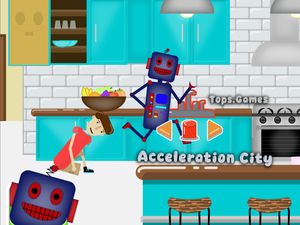
House of Hazards turns ordinary chores into a frantic local rivalry, where every room may hide a trap triggered by another player. You race through the house, complete tasks, and avoid sudden hazards while opponents look for the perfect moment to interfere. The physics keep every mistake funny and unpredictable.
This local multiplayer party action game rewards awareness as much as speed. You must watch the room, read danger signs, and judge whether a short route is truly safe. One player may focus on chores, while another quietly prepares the next disruption.
Gather nearby players, share the keyboard, and play House of Hazards online in your browser. Start carefully, learn how movement affects hazard selection, then push your luck when the finish gets close.
House of Hazards gives the match a simple goal: complete house chores before your rivals do. That goal sounds calm until several players occupy the same rooms. Each player must move through the house, find useful routes, and keep working despite constant interference.
Chores create the match’s forward pressure. You cannot win by hiding forever or simply knocking others around. Progress comes from reaching task areas and staying active long enough to finish the work. That forces players into shared spaces, where a trap or collision can ruin a clean run.
The best approach balances speed with caution. Rush too hard, and you may enter a dangerous room without checking it. Move too slowly, and another player may finish first. Local multiplayer makes every decision visible, so rivals quickly notice your favorite route and start watching it.
Sabotage gives the chore race its bite. While one player handles housework, another can prepare a hazard nearby. The threat does not feel random when you understand that players help create the danger.
Movement also connects to hazard selection in documented browser builds. That means repositioning can serve two purposes at once: escape a threat or choose the next one. Skilled players keep moving while thinking about disruption, rather than treating travel and sabotage as separate jobs.
Physics make small errors matter. A rushed jump, a poor landing, or a mistimed pass can change the whole race. Players also react to one another, so a plan rarely survives unchanged. The house becomes a moving puzzle, shaped by chores, traps, and quick local decisions.
Player 1 uses WASD to move. Keep that layout in mind before the round starts, because quick control matters when a hazard appears without warning. A player who knows the keys can change direction sooner and avoid wasting movement.
WASD also makes shared-keyboard play easy to organize. Player 1 can take one side of the keyboard while Player 2 uses the opposite side. Leave enough space between hands, and agree on seating before the match begins. Small setup choices prevent accidental bumps during tense moments.
Use short taps near hazards instead of holding a direction blindly. A long press may carry you farther than expected, especially when physics affect your movement. Release the key early when approaching a doorway, platform, or crowded task area.
Practice this connection in a quiet moment. Move through open space while paying attention to how hazard selection changes. Then apply it during a chase. You will start making safer routes while still preparing useful sabotage.
Player 2 uses the Arrow Keys to move. This gives both keyboard players a clear control area and keeps local matches practical. Player 2 should avoid frantic holds near obstacles, since a small correction often beats a full reversal.
Escaping and setting up the next threat may happen within the same short sequence.
Keep both players aware of their keyboard zones. Clear spacing helps each person react quickly, especially when a chore brings everyone into one room.
Do not treat every room as open ground. A risky room usually has limited space, a narrow approach, or a task that forces you to pause. Those features give hazards more value because you have fewer ways to escape.
Watch the other player before entering. A rival who stops moving may already be preparing trouble. Their position can reveal more than the room itself. If they guard an entrance, consider another route or wait for their attention to shift.
Study traffic patterns as the round develops. Players often return to the same task areas, and repeated paths become easy targets. Change your approach when possible. A slightly longer route may protect your progress better than a direct line through a watched doorway.
Wait for a hazard to finish its active moment before crossing. Moving immediately after disruption gives you a cleaner window and reduces panic. Watch the room, then commit with purpose.
Use another player’s movement as a timing signal. If they leave a room, the danger may have shifted elsewhere. If they approach, pause at the edge and let them reveal the threat first.
Good timing does not mean standing still for long. Take the first safe opening that supports your task, then keep moving. Hesitation can give a rival time to reset the situation.
Slow down near uncertainty. Careful movement helps you stop before danger and keeps your route flexible. Once the space looks clear, accelerate toward the chore instead of creeping through the whole house.
Choose chores by route, not just distance. A nearby task may sit inside the most watched room, while a farther chore could offer a cleaner approach. Think about where you must travel next before committing to the current job.
Start with tasks that open a useful path through the house. This keeps your movement efficient and reduces unnecessary crossings. Avoid bouncing between distant areas without a reason. Every extra trip gives opponents another chance to read your habits.
When two chores seem equal, choose the one with better escape space. A task near open floor gives you more options after completion. A task beside a tight passage leaves fewer answers if a rival triggers danger.
Keep your order flexible. If another player begins guarding your planned route, switch targets rather than forcing the issue. A smart detour can preserve your lead and make the opponent’s setup useless.
Rush when the route looks clear and your next task sits nearby. Speed matters most after a hazard has ended or a rival has moved away. Use those brief openings before the house becomes crowded again.
Wait when an opponent controls the approach. Let them reveal their timing, then move after the threat loses value. Waiting feels slow, but it can save the progress that a reckless dash would lose.
Keep the final decision simple: move for progress or pause for safety. Do not freeze without a reason.
Crouch and grab moments reward patience. Do not rush into an interaction while a rival stands close enough to interrupt your plan. Watch their position, wait for a clear opening, then act before the room changes again.
These windows also create useful bait. Approach as if you will interact, then pull away when the opponent commits to blocking you. Their movement may expose a safer path toward the chore. Good players use these moments to control attention, not only to react.
Keep your escape route in mind before starting. An interaction is safer when you already know where to move afterward.
Trigger hazards when another player has limited choices. A narrow approach, a busy task area, or a committed movement line can make disruption far stronger. Avoid activating threats too early, since the opponent may simply wait them out.
Movement keys can shift hazard selection while you travel. Use that feature to prepare pressure without abandoning your own route. The best activation supports a chore push or blocks a rival’s immediate progress.
You do not need to follow the leader everywhere. Read their route, then place disruption where they must pass. This saves movement and protects your own chores.
Pressure the next decision instead of the current position. A well-timed hazard can force a detour while you continue working.
House of Hazards runs directly in the browser and requires no download. Its browser format suits quick local matches, especially when several players share one computer. Open the game, arrange the players, and keep the keyboard ready for a fast start.
The game uses Unity WebGL technology. That supports the physics-driven action inside a browser session. Free browser access also makes short rematches easy when one round ends in a surprising trap.
Keyboard play is the clearest setup for two local players. Player 1 uses WASD, while Player 2 uses the Arrow Keys. Keep the control areas clear so both players can react without reaching across one another.
Different browser builds may organize local play in slightly different ways.
Check the available setup before adding extra players.
| Game | Why Similar |
|---|---|
| Rooftop Snipers | Local multiplayer duels where players try to knock the opponent off the stage with timed shots and movement. |
| Basket Random | Turn-based local multiplayer matches with simple controls where players compete in short rounds to outscore each other. |
Move toward the current task, but do not sprint blindly. The house often punishes direct lines, so watch the room before committing.
If an opponent is exposed, interrupt them instead of racing past. A single well-timed hazard often matters more than a risky shortcut.
The tested controls are Player 1: WASD — Move; Player 2: Arrow Keys — Move.
No. House of Hazards runs in the browser on this page, with no download, plugin or account.
House of Hazards delivers lively local multiplayer party action directly in the browser. This turns every decision into an opportunity for sabotage and keeps multiplayer matches unpredictable.
The controls support a flexible group setup: Player 1 moves with WASD, while Player 2 uses the Arrow Keys. With its clever hazard selection and accessible multiplayer design, House of Hazards is an excellent choice for shared play. Gather your players and play House of Hazards here on this page.
No comments yet. Be the first to share your thoughts!