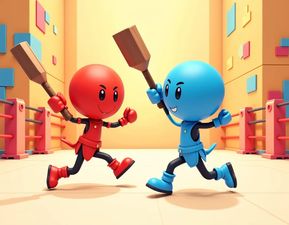
Ragdoll Hit turns floppy stickman movement into fast, momentum-driven fights where every jump, kick, and collision can change the round. Your fighter rarely moves like a rigid action hero. Instead, limbs swing, bodies tumble, and attacks gain force from motion.
That physics gives each encounter a messy but readable rhythm. Move into range, shift your weight, then attack before your body loses balance. You can fight with punches, kicks, jumps, and picked-up weapons while watching the arena for knockout chances.
Play Ragdoll Hit online now and test whether better timing can control the chaos.
Mastering Ragdoll Hit Controls and Momentum
Using Momentum for Cleaner Hits
Start with the movement keys before worrying about perfect attacks. The WASD keys move your fighter, and the Arrow Keys also move your fighter. The Space Bar attacks, while the Left Mouse Button attacks as well. These controls look simple, but the physics make each input depend on your body position.
Walk toward an opponent, then attack while your body carries forward motion. A strike from a moving stance feels more useful than one made while your fighter hangs awkwardly in place. Movement sets the direction, and the attack input turns that position into contact.
Use jumps to change the height and angle of an approach. A jumping fighter can bring a kick into a different line than a grounded punch. Do not jump without purpose, though. A poorly timed leap may leave your body rotating when you need to recover.
Shift direction before attacking when an opponent moves away. The change helps your fighter reach the new position instead of swinging at empty space. Small movement corrections often produce cleaner contact than long, wild runs.
Watch the limbs, not just the target. Ragdoll movement creates a delay between your input and the final shape of the body. Give your fighter room to finish a swing before forcing another change. That patience keeps your balance steadier and makes the next hit easier to aim.
Kicks and punches serve different practical moments. A punch works well when bodies meet at close range. A kick can help when your legs already swing toward the opponent. Neither input guarantees a hit, because the physics decide how your bodies connect.
Keep moving after an attack begins. Momentum-driven attacks become stronger or safer when your body already moves. Jumping, swinging, and shifting weight matter more than standing still. This motion also explains why battles feel unpredictable: a good attack can begin from one position and finish somewhere else.
Use short bursts when approaching a dangerous exchange. Move, attack, then correct your position. Holding one direction for too long may send your fighter past the useful contact point. Controlled movement gives you more chances to react when the opponent tumbles unexpectedly.
Practice the basic loop in empty space: move forward, jump, attack, and redirect. Then repeat it with a kick-focused approach. The aim is not speed alone. Learn how your body travels after each input, because that travel decides whether the next strike lands cleanly.
When you lose balance, avoid forcing an attack immediately. Let the body settle, then use movement to regain a useful angle. A rushed input can turn a harmless stumble into a full opening. Strong players manage recovery as carefully as they manage offense.
Weapon Handling and Mid-Fight Decisions
Picking Up Weapons Fast
Weapons create another decision inside the movement battle. When an item sits nearby, approach it with a clear line instead of charging blindly. Use the movement keys to place your fighter beside it, then watch the body’s position as you try to pick it up.
Once you hold a weapon, keep your spacing in mind. The item changes how you approach the opponent, but it does not remove the need for timing. Move into a useful range, attack with the weapon, or throw it when the angle favors you.
Do not chase an item across the arena without checking your opponent. A weapon pickup can attract attention and leave your fighter exposed. Sometimes the fastest choice means reaching the item; sometimes it means preparing to fight without it.
When to Keep or Drop an Item
Keep a weapon when your position gives it room to matter. Hold it through a close exchange if the opponent stays within reach. Drop the item when movement becomes awkward or the opponent gains a better angle. The choice depends on timing and space, not on an invented weapon ranking.
Using Throws Against Pressure
Throw a weapon when pressure prevents a clean close attack. A good release can interrupt the opponent’s approach and create space. Aim with your current body position, then move immediately rather than waiting to admire the throw.
Ragdoll Hit Arena Flow and Knockout Pressure
Edge Control and Stage Space
Read the arena as a combat tool. Environmental knockouts make stage position matter beyond simple distance. A fighter near an edge has less room to recover after a bad tumble, while the fighter in open space has more options for movement.
Guide the exchange toward useful ground instead of chasing every opening. Move across the stage, then attack when the opponent’s body travels toward a dangerous boundary. Your goal is not merely to hit. Your goal is to make the next landing harder to manage.
Keep your own escape route visible. Momentum can carry your fighter farther than expected after a jump or kick. Leave enough space to correct direction before an attack sends you into trouble. Strong arena play balances pressure with a safe place to recover.
Use the center when the opponent controls the edge. A central position gives you room to circle and wait for movement. Once the opponent shifts too far, step in with a punch, kick, or weapon attack. That approach turns space into a quiet advantage.
Forcing Bad Landings
Attack during movement, not only at rest. A hit that changes the opponent’s direction can make the next landing awkward. Jumping attacks work best when they meet a body already moving toward a poor angle.
Watch for committed movement. When an opponent travels toward one side, step into the line and attack before they regain control. The physics may send both fighters tumbling, so keep your own recovery path open.
Do not rely on one perfect launch. Several smaller exchanges can push the opponent toward a risky area. Maintain pressure, then use the arena when their body loses a clean landing position.
Turning Obstacles into Damage
Treat obstacles and arena boundaries as part of each exchange. A falling body may collide with the environment and lose its safe route. Attack when the opponent sits between your pressure and a nearby hazard, then reposition before the same space traps you.
Character Skins, Bosses, and Progression Targets
Themed Skins and Costumes
Ragdoll Hit includes themed skins and costumes that give its fighters a changing visual style. These outfits stand out during chaotic clashes, especially when bodies twist and fall across the arena. The look adds character without changing the central lesson: movement still controls the fight.
Choose a costume for its theme and appearance rather than assuming it grants a combat advantage. The established details confirm skin variety, but they do not establish special stats, powers, or weapon effects for individual outfits. Keep your expectations focused on style.
Skins also help you identify your fighter during a crowded exchange. Bright colors, unusual shapes, and bold themes make quick visual checks easier. That matters when both bodies tumble after a shared collision.
Use the visual change as a reason to keep playing, not as a substitute for practice. A new costume cannot fix a mistimed jump or a weak approach. Learn the physics first, then enjoy how different themes change the presentation of your battles.
Costume variety suits the game’s playful tone. The fighters already move in loose, exaggerated ways, so unusual outfits fit naturally into the action. Focus on the style you enjoy while judging every match by positioning, timing, and control.
Gigash, Gigacap, and Gigachica
Named bosses add clear character targets to the game’s world. Gigash, Gigacap, and Gigachica are among the named bosses associated with Ragdoll Hit. Gigachica connects with level 70 in portal and wiki evidence, giving players a specific progression target to keep in mind.
That level reference does not establish a reward or special ability. Treat it as a milestone associated with the character, not a promise about what happens afterward. The boss names still give long-term play a memorable focus.
Start playing Ragdoll Hit here and build your control before chasing tougher targets.
Ragdoll Hit Game Modes and Browser Play
Browser Access Without Downloads
WASD and Arrow Keys move, while the Space Bar and Left Mouse Button attack.
That quick access makes short practice sessions easy. Test movement first, then add attacks once the fighter responds smoothly.
Why Different Listings Read Slightly Differently
Shared mechanics offer the safest guide when descriptions do not match exactly.
Keep your expectations grounded in confirmed features. Physics combat, weapons, themed skins, bosses, and environmental knockouts define the useful picture.
Try Ragdoll Hit again below and see how quickly your movement improves.
What Players Actually Ask About the Game
Highest Level Questions
Gigachica is tied to level 70 in portal and wiki evidence. That makes level 70 a useful target when planning continued play. Treat the number as a named progression reference rather than a complete level guide.
Strongest Weapon Questions
No verified weapon ranking establishes one item as the strongest. Ragdoll Hit confirms that you can pick up, hold, throw, and fight with weapons. In practice, position and timing decide how useful an item becomes. A well-timed throw may help more than a held weapon during a crowded exchange.
Controls and Character Questions
Ragdoll Hit includes themed skins and costumes, plus named bosses such as Gigash, Gigacap, and Gigachica. The confirmed details do not assign special combat powers to particular costumes.
✨ Key Features of Ragdoll Hit
Physics-based ragdoll combat
Weapons and item pickups
Environmental knockouts
Themed skins and costumes
Named bosses including Gigash, Gigacap, and Gigachica
Browser-based free play
How to Play Ragdoll Hit
Step 1: Start with movement control
Use A/D or the arrow keys to learn how your ragdoll shifts weight. Keep your movement small at first, because overcommitting makes you easy to topple.
Step 2: Jump only when it helps
Press W or Up Arrow to jump when you need reach or space. Jumps are useful for closing distance, but careless jumps often leave you off-balance.
Step 3: Grab weapons early
Press Spacebar near items to pick them up or hold them. A weapon gives you more ways to attack, but only if you keep control of your body.
Step 4: Fight the arena, not only the opponent
Use the stage edges, walls, and spacing to create bad landings. Many wins come from forcing the other fighter into a messy fall or knockback.
Step 5: Drop greedy habits
Do not chase every hit. Small, timed actions usually beat long flurries, because ragdoll movement punishes overextension.
Ragdoll Hit FAQs
Does Ragdoll Hit require a separate installation?
No. The browser version of Ragdoll Hit runs on the page without a separate installation.
What is the strongest weapon in Ragdoll Hit?
Weapon value depends on timing, spacing, and whether you can safely keep control of the fight.
What are the different characters in Ragdoll Hit?
The game uses customizable stickman fighters with themed skins such as knights, kings, ninjas, assassins, samurais, and superheroes.
Conclusion
Ragdoll Hit delivers physics-based fighting where momentum-driven attacks make every clash feel dynamic. Strikes become stronger or safer when your body is already moving, so jumping, swinging, and shifting weight matter more than standing still. Managing that motion well helps you land cleaner hits and lose balance less often, while keeping battles unpredictable and engaging.
The controls are easy to understand: use the WASD Keys or Arrow Keys to move, then press the Space Bar or Left Mouse Button to attack. This focus on movement and timing gives each encounter a lively, skill-based feel without unnecessary complexity. Experience the momentum, physics, and unpredictable action of Ragdoll Hit—play it right here on this page.
Ragdoll Hit Game Video
YouTubeWatch Gameplay
Game Controls
WASD Keys
Move
Arrow Keys
Move
Space Bar
Attack
Left Mouse Button
Attack
No comments yet. Be the first to share your thoughts!


No comments yet. Be the first to share your thoughts!