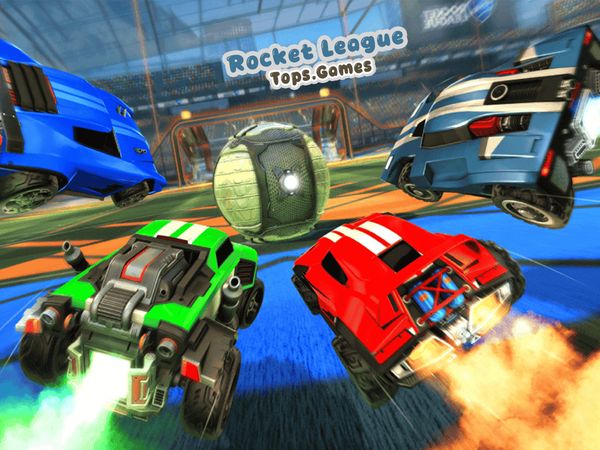
Rocket League turns ordinary driving into a fast fight for every touch. Cars race, leap, and smash a giant ball toward the opposing goal. One clean hit can change the entire match within seconds.
Start with simple steering, then learn how momentum shapes each challenge. W accelerates, while AN and D guide your car across the pitch. S reverses when you need a quick retreat or sharper defensive setup. Space Bar adds the jump that opens aerial plays and urgent blocks.
Good players read the ball, protect useful space, and recover quickly. Ball Camera helps you track the action while your car repositions. Switch views when the wider field matters more than the ball itself. Play Rocket League online here and test these fundamentals immediately.
Core Mechanics of Rocket League
Car Steering and Momentum
W Key accelerates your car across the pitch. A Key steers left during every turn. D Key steers right with the same control. S Key moves your car backward when space disappears. These four inputs create your basic driving language.
Hold a direction before reaching the ball. Early steering produces cleaner approach angles. Late steering often sends the car past the play. Release acceleration when you need tighter control. Then press W again once your line looks right.
Acceleration changes more than your travel speed. It also changes the force behind each impact. A fast approach can drive the ball toward the goal. A slower approach gives you more time to adjust. Choose speed according to the ball’s position and angle.
Think about the car’s nose before every contact. A centered nose sends the ball forward more directly. A side angle redirects the ball toward another lane. Opposing cars can then miss their defensive challenge. Small steering changes create surprisingly different results.
Keep momentum useful after each hit. Turn toward open space instead of stopping beside the ball. This keeps your car ready for another touch. It also helps you cover a teammate’s missed approach. Strong driving connects one action to the next.
Jumping and Ball Hits
Space Bar makes the car jump into the air. Use it when the ball rises above ground level. A jump can also block shots near your goal. Time the jump around the ball’s incoming path. Jumping too early leaves the car below the contact.
Combine steering with the jump for angled hits. Approach from underneath when you need lift. Meet the ball’s side when you need a redirect. Your speed and contact angle decide its new direction. Practice controlled touches before attempting difficult aerial challenges.
Mastering the Ball Camera and Vision
Toggling the Ball Cam
F Key toggles Ball Camera during play. Ball Camera focuses your view directly on the ball. Standard perspective points forward behind your car instead. Each view answers a different question during pressure.
Use Ball Camera when the ball travels across the arena. The view keeps its location easier to follow. You can judge distance, height, and incoming movement sooner. That information helps you prepare defensive saves and aerial angles. It also prevents blind turns toward a changing play.
Switch to standard perspective when your car needs attention. This view shows the space directly ahead more clearly. Use it while driving into open lanes or lining up a turn. It can also help you judge nearby walls and empty routes. Then return to Ball Camera before the next important challenge.
Do not treat one view as permanently correct. Strong players switch according to the current task. Track the ball during a contest, then check forward space. This rhythm improves control without losing awareness. The change should feel deliberate rather than frantic.
Try a simple habit during practice. Follow the ball with Ball Camera first. Toggle forward perspective while moving into position. Toggle back before the ball reaches your car. Repeating that cycle builds faster visual decisions.
Field Positioning
Position your car where the next touch can help. Ball Camera shows the ball’s movement across the pitch. Standard perspective shows your immediate driving lane. Use both views to avoid chasing the same space. Good positioning leaves room for a save or follow-up.
Stay goal-side when an opponent controls the ball. Move wider when the ball leaves the center. Watch the open lane behind your current path. Then choose a route that protects space instead of simply following movement. Awareness turns vision into practical defense.
Rocket League gameplay
Recoveries and Goal Line Defense
Left Shift triggers Nitro for a sudden acceleration surge. Use Nitro when a contested ball sits just beyond reach. A short burst can win the approach without wasting position. Save longer bursts for urgent challenges near your goal. Speed matters most when the timing matches the threat.
Defensive recovery starts immediately after a missed touch. Turn toward your own goal instead of chasing the ball blindly. Use S Key if you overshoot and need reverse control. Use A Key or D Key to straighten your return path. Keep the car moving while you rebuild a useful angle.
Watch the ball’s line, not only its current location. An incoming shot may change direction after a hard impact. Place your car between that line and the goal. Then prepare Space Bar for a last-second block. Jump only when the ball’s height requires it.
Goal line defense rewards patience. Do not leave the net for every loose ball. Hold the central area when an opponent has a clear approach. Move toward the likely crossing point as the shot develops. This gives your jump a better chance to meet the ball.
Nitro can close the final gap quickly. Activate Left Shift after you identify the interception route. Point the car toward the ball’s future path first. Then accelerate through the contact instead of drifting beside it. A direct line beats a faster car with poor positioning.
Recoveries also protect your next defensive action. After a block, turn away from the goal mouth. Create space before searching for another touch. A rushed second challenge can send the ball back dangerously. Clear your route, then rejoin the play.
Use Ball Camera when the shot crosses your view. It helps track the ball while you reposition. Switch forward when your car needs a clean escape lane. This keeps vision connected to movement during stressful saves. Good defenders manage both the ball and their own recovery.
Practice saves from different distances. Start with slow incoming balls near the goal line. Add sharper angles once your timing improves. Then include Nitro for late interceptions. Each drill teaches a separate decision under pressure.
Start playing Rocket League now and turn these recovery habits into instinct.
Rocket League Match Structure and Scoring
Scoring and Kickoffs
A team scores by sending the ball into the opponent goal. Every attack aims to create that final crossing touch. Angle the car toward open space beside the goalkeeper. Then use speed and contact direction to push the ball through. A clean finish gives your team another point.
Kickoffs reset vehicle positions in the arena after goals. Players begin from those arranged starting locations again. The ball returns to a central contest. Read your starting angle before accelerating forward. W Key provides the initial drive toward the challenge.
Kickoff timing affects the ball’s first direction. Meet it squarely when you want a direct contest. Approach from an angle when you want a different deflection. Coordinate your movement with the visible setup. The opening touch can shape the next attack.
Match End Conditions
The match clock counts down during regulation play. Teams use that time to build the higher score. When regulation ends, the leading team wins. A tied score requires the match rules to decide what happens next. Watch the clock closely during every late attack.
Protect a lead without abandoning useful pressure. Keep the ball away from your goal when possible. Chase an equalizer when the score demands it. Every final touch carries extra weight near the countdown.
Platforms and Version History
Browser WebGL Adaptation
Psyonix released Rocket League in July 2015 for PlayStation 4 and Windows. The game grew from vehicular soccer into a major competitive title. Subsequent console ports brought its car-based matches to more systems. Psyonix later joined Epic Games in June 2019. The main game then moved to a free-to-play model.
That history explains the game’s broad reach today. Its core appeal stays easy to understand: drive, jump, boost, and strike. New players can grasp the goal quickly. Skilled players keep finding deeper value in speed and angles. The result combines arcade driving with soccer competition.
Destruction Crew’s lightweight adaptation uses Unity WebGL technology. It brings the central car-and-ball idea into a browser format. The adaptation focuses on quick access and familiar movement. W Key accelerates, while AN and D steer the vehicle. S Key reverses, and Space Bar handles jumping.
Left Shift provides Nitro for sudden bursts toward the ball. F Key switches Ball Camera during active play. That view keeps the ball central while the car changes position. Standard perspective remains useful for forward driving and route checks. Together, these controls preserve the game’s quick decision-making.
Rocket League opens in a phone browser, but it is played with the keyboard, so a computer works best.
Is there a Rocket League 2?
No. Rocket League 2 has not been released — Rocket League is the newest game in the series.
What are the basic controls for Rocket League?
Browser keyboard: W Key — accelerate; A Key — steer left; S Key — reverse; D Key — steer right; F Key — ball camera; Left Shift — nitro; Space Bar — jump; Escape Key — pause.
What platforms is Rocket League available on?
Rocket League first launched on PC and PlayStation 4, later releasing on Xbox One and Nintendo Switch. Mobile players can access Sideswipe, while this edition runs inside desktop web browsers.
Conclusion
Rocket League turns vehicular soccer into an exciting test of driving, positioning, and timing. Whether you choose singleplayer or multiplayer, every moment revolves around reading the ball and making the right move with your car. The Ball Camera is especially useful, switching your perspective to focus directly on the ball so you can track it across the arena while repositioning for defensive saves or aerial angles.
Simple controls give you plenty of room to develop your skills: use W to accelerate, AN and D to steer, S to reverse, Left Shift for Nitro, and Space Bar to jump. Press F to activate the Ball Camera and Escape to pause. With accessible controls and satisfying vehicular soccer action, Rocket League is ready to play—try it right here on this page.
Rocket League Game Video
YouTubeWatch Gameplay
Game Controls
W Key
Accelerate
A Key
Steer left
S Key
reverse
D Key
Steer right
F Key
Ball camera
Left Shift
Nitro
Space Bar
Jump
Escape Key
Pause
No comments yet. Be the first to share your thoughts!

No comments yet. Be the first to share your thoughts!