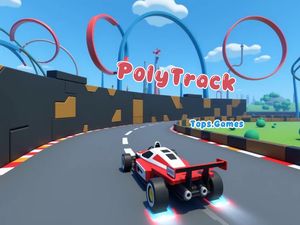
PolyTrack turns every lap into a high-speed test of timing, control, and nerve. Loops launch your car upward, jumps punish poor landings, and sharp turns split fast runs from clean ones. The low-poly look keeps the focus on the track and the clock.
Created by Kodub, this racing time trial game rewards repeated attempts. You learn each section by driving it, missing the ideal line, then trying again with a small correction. Safe driving keeps the car moving, but real progress comes from carrying speed through risky sections.
Ready to chase a cleaner run? Play PolyTrack online now and test your control against the course.
PolyTrack’s Core Race Loop
Time Trial Pressure
PolyTrack builds its challenge around repeated runs against the clock. You start a course, push for speed, and study every mistake. A single missed turn may cost the run, yet that failure also reveals where your approach went wrong. The next attempt feels immediate, so practice never loses momentum.
Time trials change how you view the track. You do not simply aim to reach the finish. You aim to reach it sooner, with fewer slowdowns and tighter movement. A cautious line might keep the car safe, but it rarely produces a strong time. Instead, you gradually trade comfort for speed. Brake less before familiar corners. Commit earlier to jumps. Keep the car pointed toward the next section.
Each restart gives you another chance to refine one detail. Over time, those small changes shape a much faster route.
Loops, Jumps, and Sharp Corners
The course design keeps your attention moving. Loops demand steady control while the car changes direction around the track. Jumps test your setup before takeoff and your control after landing. Sharp corners then force quick steering decisions, especially when you approach them at full speed.
These elements rarely reward a slow, careful rhythm. PolyTrack pushes you toward better lines and stronger commitment. Learn the order of each obstacle, then prepare for the next one before the current section ends.
Why Every Millisecond Matters
A fast run comes from many tiny gains. Turn slightly earlier. Hold speed through a loop. Land with a better angle. None of these changes seems huge alone, but together they cut meaningful time.
That focus makes each attempt useful. Even a failed run can expose one lost second.
PolyTrack gameplay
Designing for Flow
Custom track building adds a second way to understand PolyTrack. Instead of only learning courses, you can shape the challenges yourself. Place sections that test speed, direction changes, loops, or jumps. Then connect them into a route that feels natural from one obstacle to the next.
Good design depends on flow. A sudden corner after a blind jump may create difficulty, but it can also break the rhythm. Give the car room to respond when a section needs precision. Use faster stretches to build pace before a demanding turn. Let each part prepare the player for what follows.
Building tracks also improves your driving sense. You notice how much space a corner needs and how quickly a jump approaches. Those lessons carry into your next run.
Testing a Route Quickly
Do not wait for a perfect design before testing. Drive the route as soon as its main shape works. Watch where the car loses speed, clips an edge, or lands awkwardly. Then change one section and test again.
Quick testing keeps the cause clear. If you alter everything at once, you may not know which change helped. Build, drive, adjust, and repeat until the course feels fast without becoming confusing.
Where Custom Tracks Help Most
Custom tracks help you focus practice. Create a route around one hard corner or one jump. Repeat that challenge until your approach feels consistent. You can then add more sections and test the full run.
Driving Controls That Shape Your Pace
WASD and Arrow Key Driving
The confirmed driving controls use the WASD keys to move. Treat those inputs as tools for line control, not frantic corrections. Small changes often keep the car centered through a fast section. Large movements can send it wide before the next corner appears.
Start by learning what each movement does at low pressure. Then apply the same control at higher speed. Hold a steady direction through a loop when the track allows it. Release or change direction before a sharp corner demands a new line. Your goal is not constant input. Your goal is deliberate input.
Jumps make timing even more important. Set the car up before the launch, rather than steering wildly in the air. After landing, regain a stable line quickly and prepare for the next obstacle. The best control feels calm because each action happens before the problem arrives.
Use the same approach on custom routes. A track creator can place difficult turns close together, leaving little room for recovery. Practicing with WASD helps you build smoother habits instead of relying on last-second saves.
Restarting Runs Efficiently
The R key restarts the run. Use it when a mistake has already ruined your pace or sent the car into an unhelpful position. Fast restarts keep the time-trial loop focused and reduce wasted driving.
Do not restart after every tiny error. Continue when the car still has a useful line. Sometimes recovery teaches more than a perfect attempt. Restart when the remaining route no longer gives you a meaningful test.
Before pressing R, identify the mistake. Name the corner, jump, or landing that failed. Then change one choice on the next run. This turns restarting into practice instead of repetition without a plan.
Start playing PolyTrack here and turn each restart into a faster, cleaner attempt.
Reading Corners, Jumps, and Recovery Points
Approaching Corners Cleanly
Read a corner before you reach it. Look for the exit and aim your car toward that space early. Entering too wide forces a late correction, which often costs more speed than a slightly slower entry.
Sharp corners deserve a clear plan. Choose whether you want a tight line or a wider setup, then hold that choice through the turn. Avoid rapid steering changes unless the track demands them. Smooth movement protects your speed and leaves the car ready for the next section.
On repeated runs, use the same visual marker before each turn. That marker might be the end of a straight or the start of a track piece. Consistent timing makes the corner easier to read.
Managing Landing Speed
Jumps begin before the car leaves the track. Approach the launch with a stable direction and avoid entering at an awkward angle. A clean takeoff gives you more control when the wheels return to the surface.
Landing speed matters because the next obstacle may arrive quickly. Keep enough pace to continue, but value a straight landing over reckless speed. A stable car recovers faster and makes the following corner easier.
Recovering After a Mistake
Not every mistake ends the run. If the car remains on the course, make small corrections and find the next safe line. Avoid turning one error into another through frantic inputs.
When recovery costs too much time, press R and try again. The restart works best when you already know what failed.
Custom Tracks and Community Play
Why Track Variety Matters
Track variety keeps practice from becoming automatic. A familiar route teaches consistency, while a fresh custom course tests how well you read new shapes. Different combinations of loops, jumps, and corners also expose weaknesses in your driving.
Use simple routes to build rhythm. Then add tighter turns or faster transitions. Variety gives each run a different question to answer without changing PolyTrack’s basic goal: finish with better control and time.
Learning From Built Courses
Built courses show how track pieces work together. Study where a jump leads, how much space follows a corner, and where speed begins to matter most. Then borrow those ideas for your own designs.
Driving a course and building one teach different lessons. Together, they make the track easier to read.
Sharing and Replaying Routes
Custom routes become useful practice tools when you replay them often. Return to a difficult section and compare your approach across several attempts. Small improvements become easier to notice.
If you exchange a route with another player, focus on its line choices and timing. A shared course can reveal problems its creator missed.
PolyTrack on Browser Platforms
Where It Runs
The game uses HTML5 technology, so you can reach the racing action from a supported browser. Open the game, load a course, and begin practicing without setting up a separate program.
This format suits short time-trial sessions. You can make a few attempts, leave, and return later.
What the Browser Build Changes
Browser access makes the start of each run simple. The racing loop stays focused on driving, testing, and restarting. Custom track work also feels easy to revisit because the game sits close at hand.
Why No Download Matters
Open it here and get straight into the next time trial. Play PolyTrack now and chase a faster line.
✨ Key Features of PolyTrack
Low-poly racing
Time trials
Fast restarts
High-speed driving
How to Play PolyTrack
Step 1: Use the game controls
Use WASD Keys to move. Use R Key to restart.
Step 2: Start a run
Load the game and begin on a track you want to learn.
Step 3: Drive with precision
Use WASD or the arrow keys to steer through corners and keep speed steady.
Step 4: Save time on mistakes
Restart quickly when a run goes bad, so you can chase cleaner laps.
Step 5: Test and refine
Run your custom track, note weak turns or awkward jumps, then adjust the layout.
PolyTrack FAQs
What are the basic controls for PolyTrack?
Browser keyboard: WASD Keys — move; R Key — restart.
Can I play PolyTrack on mobile devices?
Yes. PolyTrack has a mobile release through Google Play.
Does PolyTrack require a separate installation?
No. The browser version of PolyTrack runs on the page without a separate installation.
What makes PolyTrack different from a standard racer?
PolyTrack adds track building to the racing loop. You are not only chasing faster laps, but also learning and improving routes you can create yourself.
PolyTrack is an HTML5 racing time trial from Kodub that keeps the focus on direct, single-player action. Its clear objective and streamlined format make each attempt feel purposeful, while the responsive controls invite you to concentrate on movement and improve your run through practice.
Playing is simple: use the WASD keys to move, and press the R key to restart whenever you want another attempt. Try PolyTrack here and start your next time trial on this page.
PolyTrack Game Video
YouTubeWatch Gameplay
Game Controls
WASD Keys
Move
R Key
Restart
No comments yet. Be the first to share your thoughts!


No comments yet. Be the first to share your thoughts!